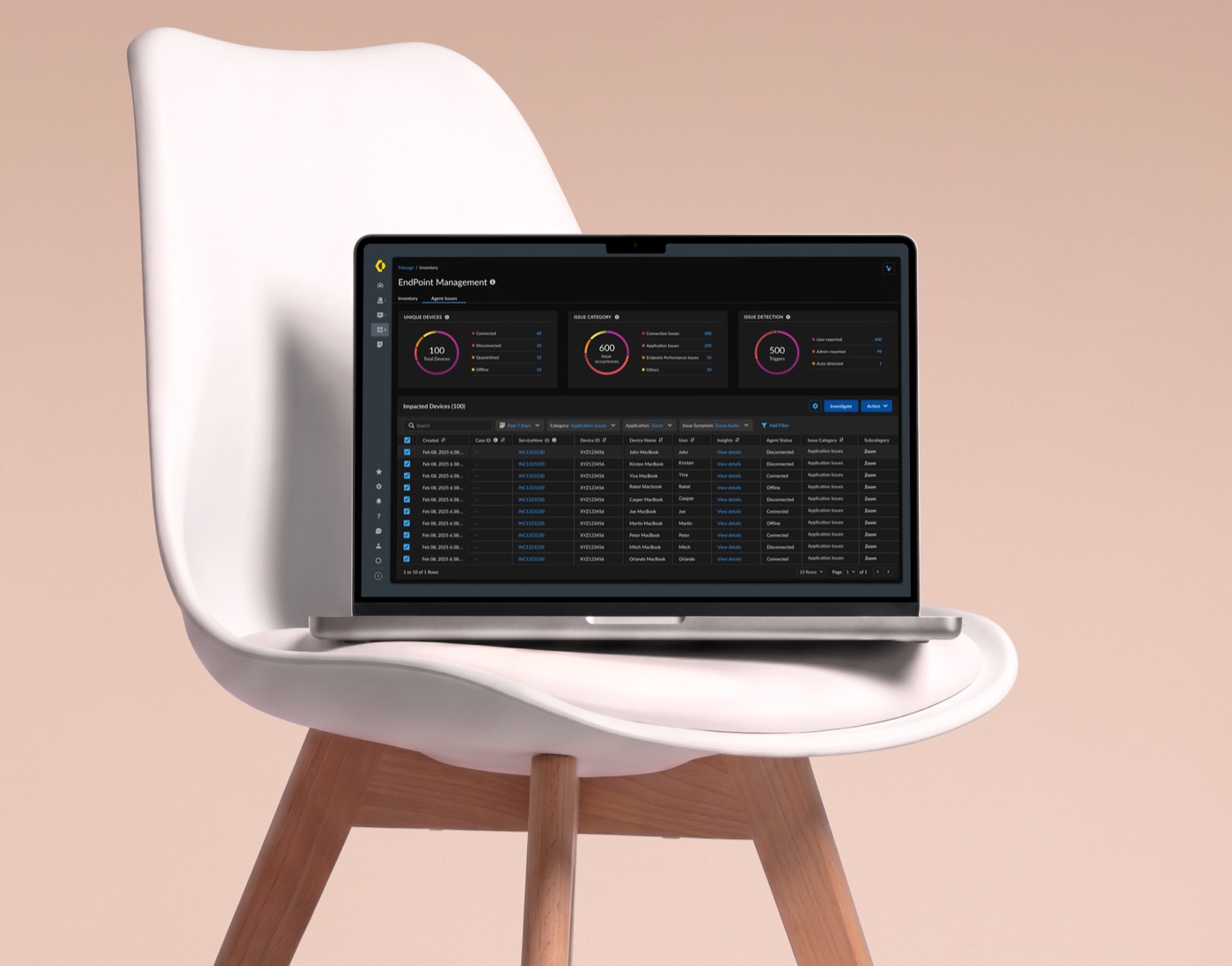
Application Onboarding
Simplifying the onboarding of complex applications through guided workflows, automation and an agentic assistant that meets admins where they are.
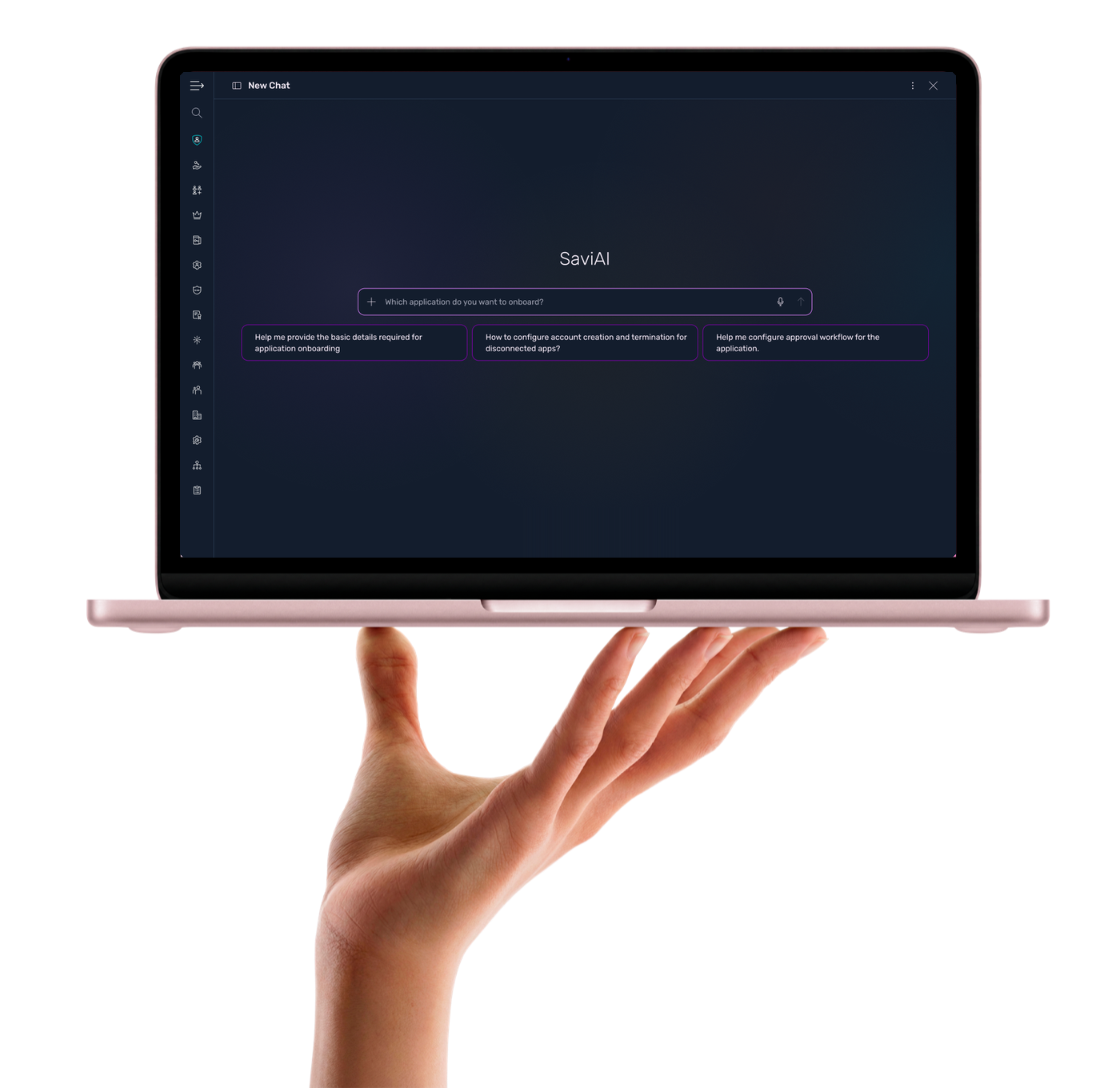
Onboarding shouldn’t need a manual.
Enterprise security applications are notoriously hard to onboard. Before any value is delivered, an administrator has to connect data sources, configure policies, assign roles and validate deployments, often across several products and consoles.
This project reimagined onboarding as a guided, progressively automated journey rather than a checklist of configuration screens.
Slow, complex and manual.
The onboarding experience was slow, complex, and heavily dependent on manual effort.
Lead design across three product teams, define the onboarding architecture, and build the design-system patterns every application team would adopt.
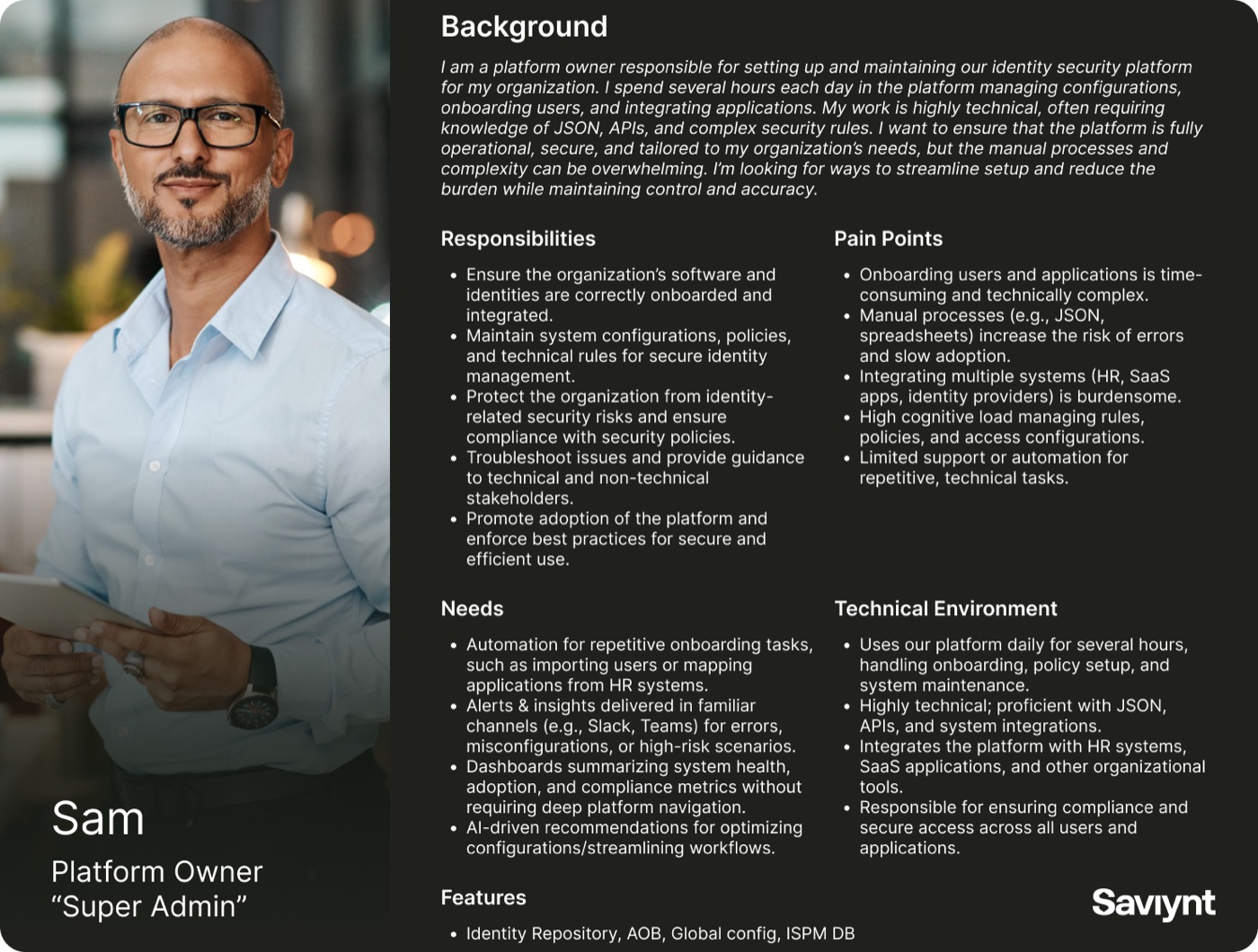
Meet Sam, the “Super Admin”.
A platform owner who spends hours every day managing configurations, onboarding users and integrating applications. The work is highly technical and full of manual, repetitive steps.
Five principles to design by.
After the initial research I facilitated brainstorming sessions with product managers and key stakeholders to explore the findings, identify opportunities and map every use case in the onboarding experience.
From intent to onboarded, in one flow.
After several rounds of iteration we converged on an agentic direction. Step through the core moments of the flow.
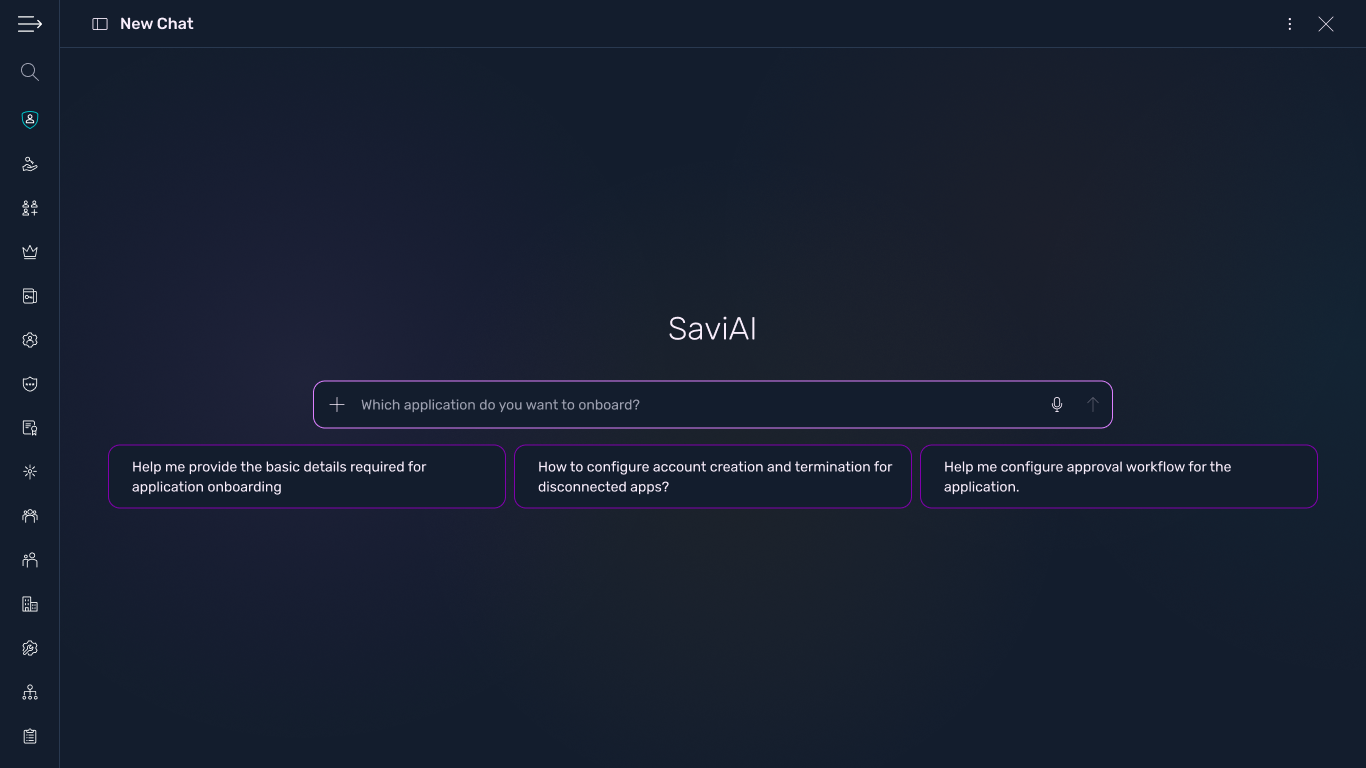
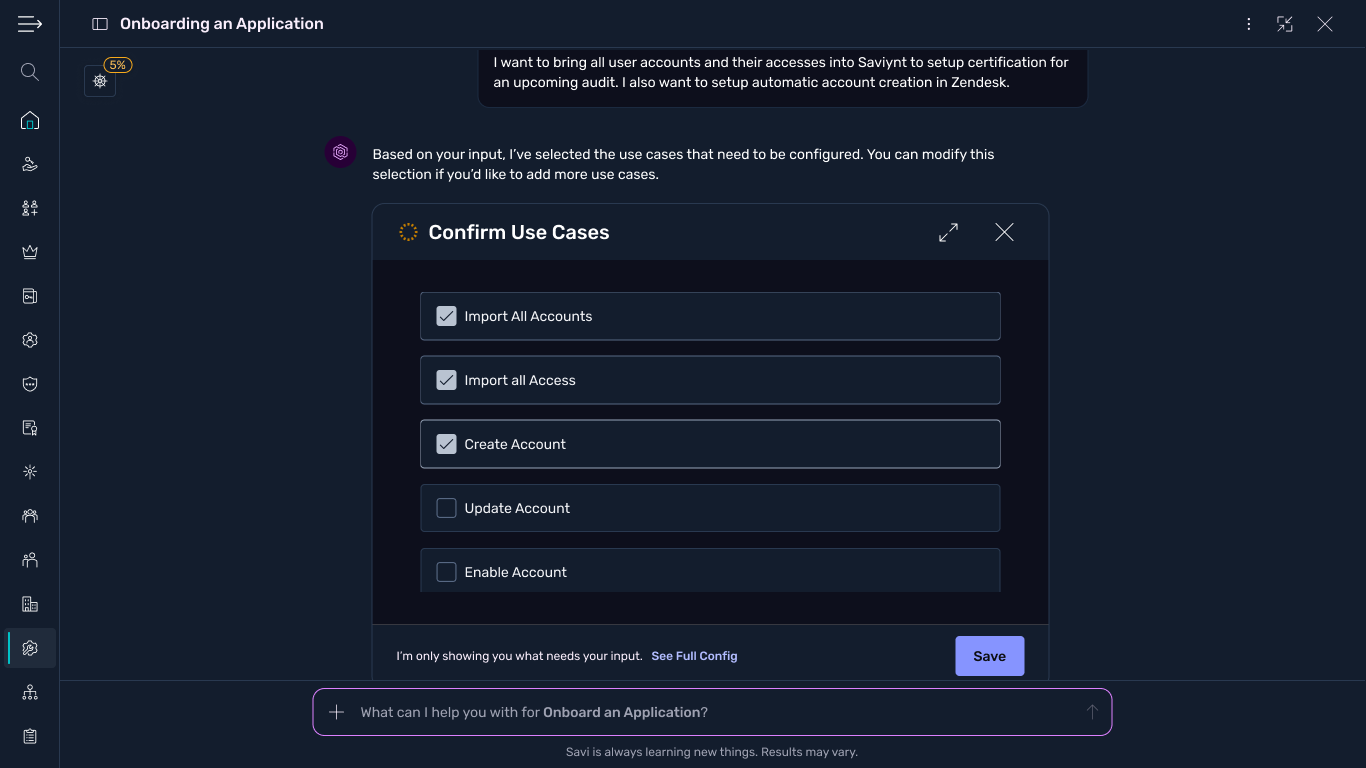
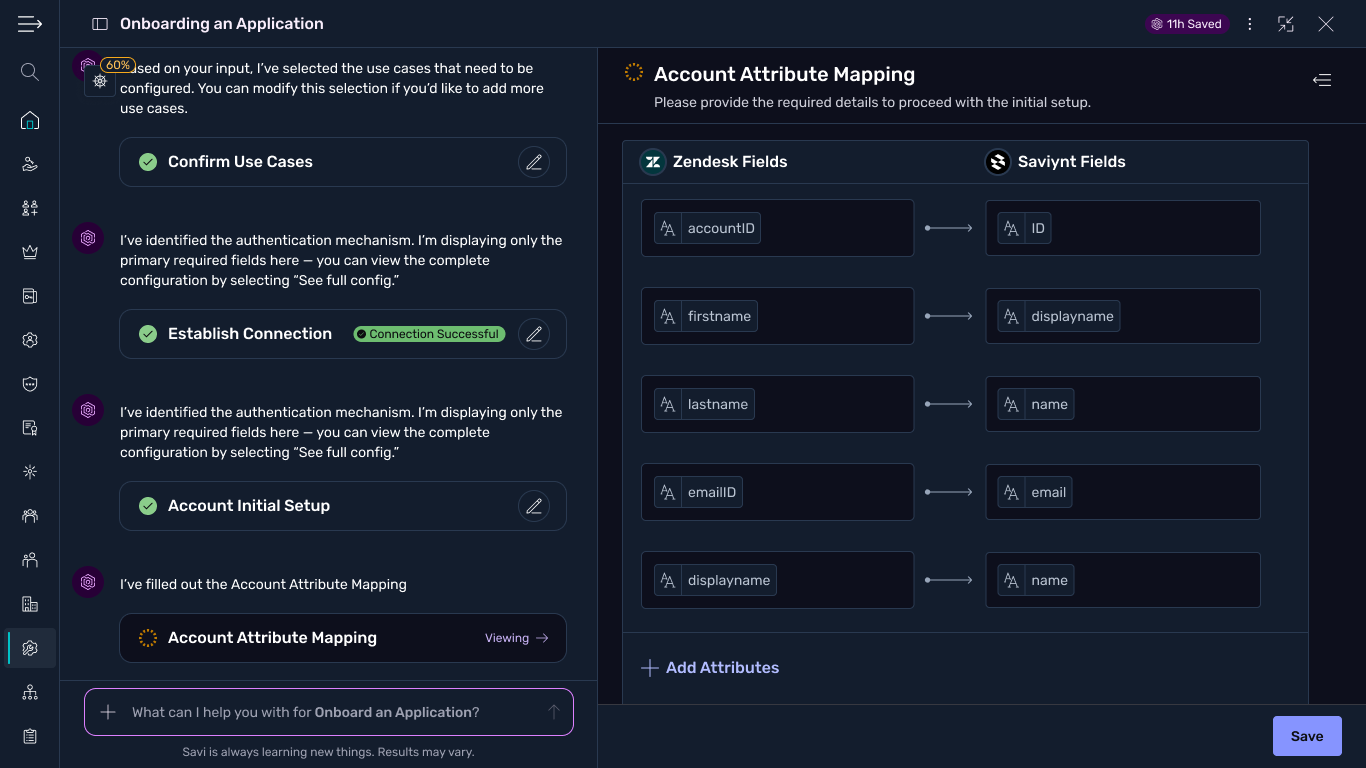
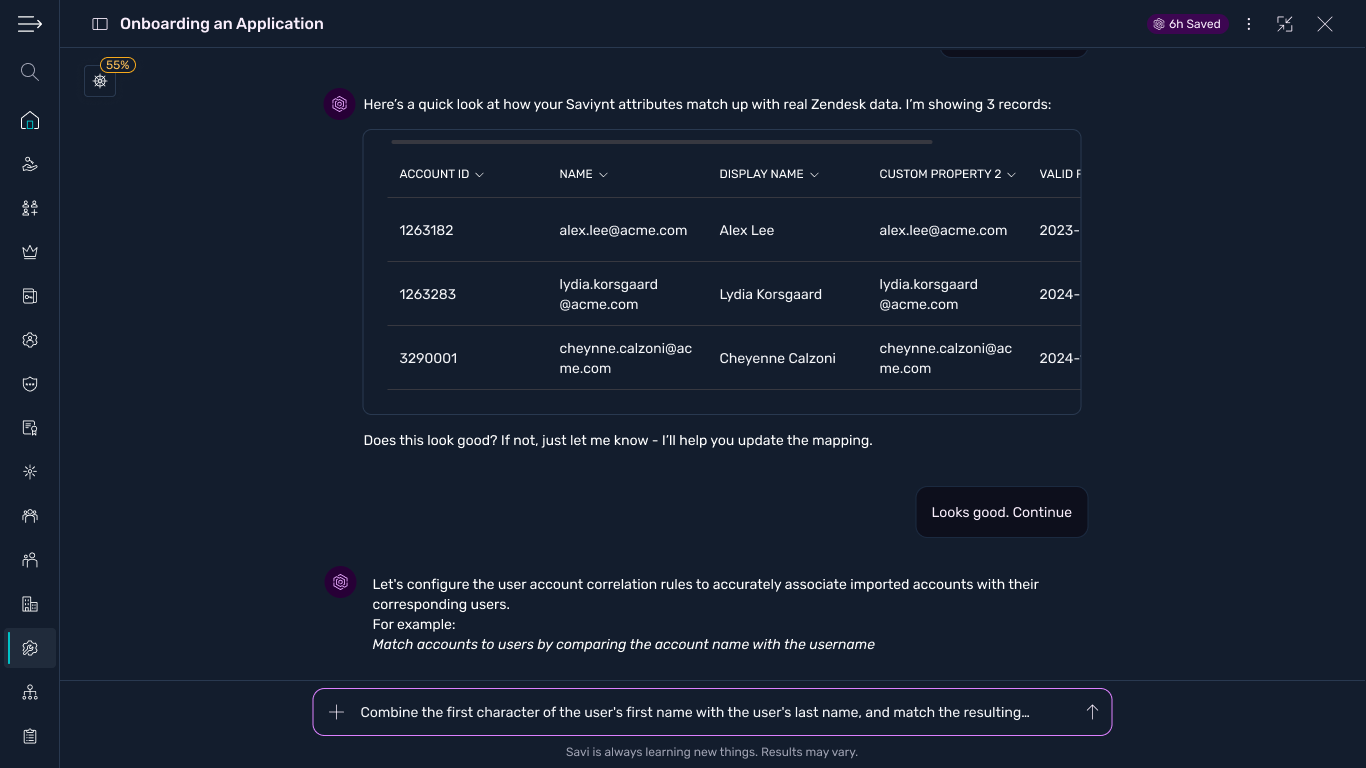
Validating the agentic experience.
With the flow finalized, I partnered with the UX research team on a research plan and testing with real IT admins and internal Sales Engineers, focused on the usability and effectiveness of the new agentic method.
In remote, moderated sessions participants performed realistic tasks: how easily could they onboard their application, and where did it hurt?
 Usability sessions
What worked
- The tool felt intuitive overall
- Attribute mapping
- User correlation rules
What to improve
- Clearer guidance through the flow
- Simplified interfaces
- More contextual information
- Tooltips and streamlined workflows
One guided journey. Five milestones.
Each milestone has clear entry criteria, live validation and an explicit definition of done. A shared progress model shows what’s complete, what’s blocked and what can wait.
The pattern shipped as a design-system framework, not a one-off flow. Three application teams adopted it in the first two quarters, so the investment compounded: every new product now onboards the same way.
Try App Onboarding yourself.
Click through the agentic onboarding flow in Figma.
Open in FigmaLess setup. Faster value.
Setup steps cut from fourteen to five.
Down from weeks for new deployments.
Application teams adopted the framework in the first two quarters.
The guided framework became the onboarding standard across the platform.